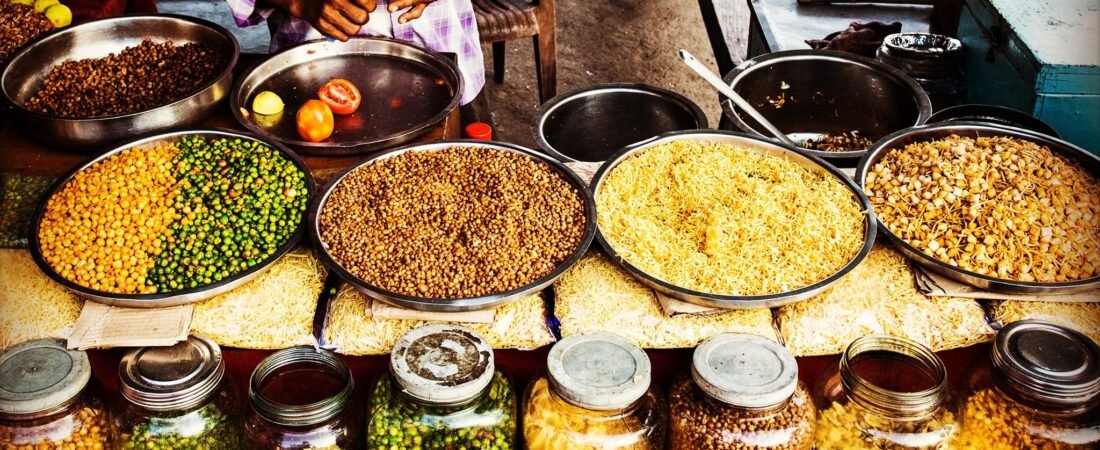
You have not really experienced India until you have eaten your way through it.
From sizzling pav bhaji on a Mumbai street corner to crisp golden jalebi pulled fresh from the pan, Indian street food is a festival for the senses. I ate where the queues were longest and the locals were happiest. That is always the rule, and it has never once failed me.
What to try first
Pav bhaji. Spiced mashed vegetables cooked on a huge flat griddle, served with soft buttered bread rolls. Born in Mumbai as a quick lunch for textile workers, now a national obsession. Watch the vendor work the griddle for a minute before you order; it is half the show.
Pani puri. Crisp hollow shells filled with spiced potato and tangy, spicy flavored water, eaten in one bite. Messy and magical. It goes by different names as you travel: golgappa in Delhi, puchka in Kolkata, and the fillings shift by region. The vendor hands them to you one at a time, and there is a rhythm to it. Keep up.
Masala chai. From a roadside stall, in a tiny clay cup called a kulhad that you smash when you finish. Strong tea boiled hard with milk, ginger, and cardamom. Ten rupees of pure happiness. I had one every morning and I miss it physically.
Jalebi. Batter piped in spirals into hot oil, then soaked in saffron syrup. Sticky, sweet, impossible to stop eating. Best eaten hot within about ninety seconds of leaving the pan, ideally with a cup of chai in the other hand.
And once those are ticked off: vada pav (Mumbai’s potato-fritter sandwich, often called the Indian burger), samosa chaat drowned in chutneys and yogurt, dosa from a South Indian cart, kathi rolls in Kolkata, and aloo tikki anywhere in the north.
Chaat, and the joy of eating with your hands
A word you will meet everywhere: chaat, the great family of savory snacks to which pani puri and samosa chaat both belong, built on crunch, chutney, yogurt, and spice in endlessly shifting proportions. The name is usually traced to a verb meaning “to lick”, which tells you the required level of enthusiasm. Much of this food is designed for hands, and eating with your right hand is the custom worth honoring; the left is traditionally kept out of shared food. Nobody will scold a traveler fumbling with a spoon. But somewhere around your third plate eaten properly, standing at the stall with chutney on your wrist, you stop being a spectator of the scene and become part of it. That is the real souvenir.
How to eat street food without regretting it
A few honest rules I follow, because the question everyone asks is “did you get sick?” (No. Not once.)
- Eat where it is busy. High turnover means nothing sits around. The longest queue is the best restaurant review in the world.
- Watch it being cooked. Anything fried or griddled in front of you at high heat is your friend.
- Be careful with raw items: pre-cut fruit sitting out, salads, and ice. This includes the pani in pani puri at questionable stalls. Busy vendors using filtered water are fine; when in doubt, ask for the dry version, sukha puri.
- Drink bottled or filtered water, and start slow. Give your stomach two or three days to warm up before you go full send.
- Carry hand sanitizer and small notes. Most stalls are cash-only and nobody has change for a 500.
Planning a street food trip
When to go. For most of northern and central India, the cooler, drier months from roughly October to March are the sweet spot: comfortable evenings, festival season, and vendors at full roar. Summer heat is brutal on street-eating stamina, and the monsoon months, atmospheric as they are, complicate hygiene at the margins.
Where to aim. Every city keeps its own greatest hits: Mumbai for pav bhaji and vada pav near the sea, Delhi for chaat and stuffed parathas in the old city, Kolkata for puchka and kathi rolls, Amritsar and Lucknow for food so storied that people ride trains just to eat it. You cannot see it all. Choose two cities and eat them properly.
What it costs. Gloriously little. Most street dishes cost small change, and even an ambitious evening of grazing rarely adds up to the price of a single casual restaurant meal back home. Budget more stomach capacity than money.
A good first move. Consider a guided street food walk on your first evening in each city. A local guide solves the which-stall question instantly, explains what you are eating, and calibrates your confidence for solo missions afterward. Your guesthouse can usually point you to a good one.
Insider tips
Go out at the right hour: street food peaks from late afternoon into the night, when the griddles are hottest and turnover is fastest. Order one plate at a time and share everything, because stomach space is the scarcest resource in India. Say yes to the extra chutney once, then decide who you are. Learn the head-wobble, or at least stop being alarmed by it. And keep one pocket stocked with small notes and coins; the vendor’s day moves fast, and being easy to serve is its own kind of politeness.
The Coco report
Coco was on a strict no-street-food policy, which she considered a human rights violation. She received plain rice and chicken at the guesthouse and one illegal bite of buttered pav, which I regret nothing about.
Frequently asked questions
Is Indian street food safe for travelers?
It can be, with the habits above: busy stalls, hot food cooked in front of you, caution with raw items and water, and a gentle first few days. Careful does not have to mean deprived.
What should I try if I cannot handle spicy food?
Plenty is mild: jalebi and most sweets, plain dosa, fresh breads straight off the griddle, and momos in the hill towns. You can also ask for less spice, and most vendors will happily oblige.
Is Indian street food vegetarian-friendly?
Wonderfully so. A huge share of it is vegetarian by default, and many stalls are purely vegetarian. It may be the easiest place on earth to eat meat-free without ever noticing.
Planning your trip? Try my free Travel Budget Calculator to plan your trip with confidence.
— Lina