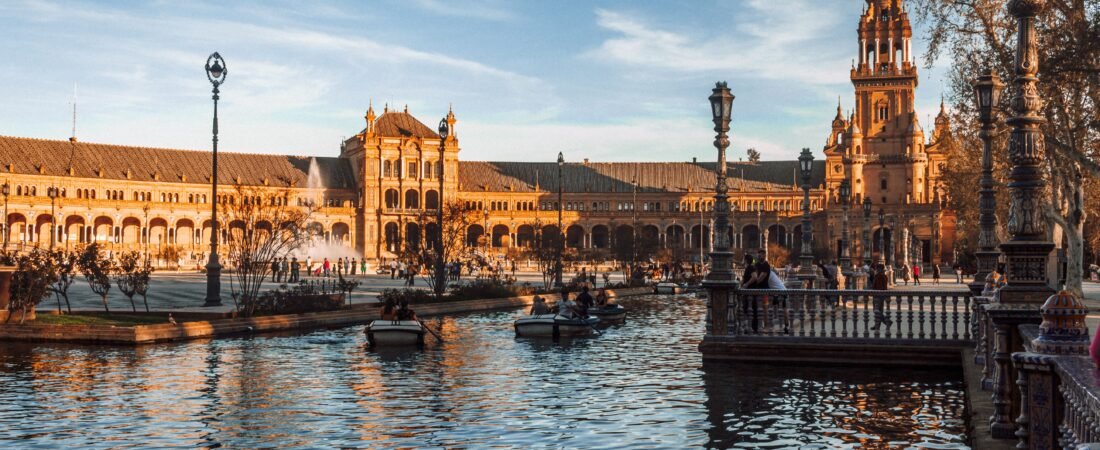
Seville is a city you walk slowly through, neck craned upward.
From the soaring Giralda tower to the Royal Alcázar’s tiled courtyards to the grandeur of Plaza de España, the architecture tells the story of centuries layered on top of each other: Moorish, then Christian, then Renaissance, each one building on (literally, on top of) the last. Every alley in the old town opens onto something beautiful. I planned two days here and stayed five.
A quick history, because it makes everything better
Seville spent over 500 years under Muslim rule as part of al-Andalus, and its greatest buildings carry that DNA. When Christian kings took the city in 1248, they did something unusual: instead of only demolishing, they often kept, converted, and imitated. Christian rulers hired Muslim craftsmen to build in the Islamic style, creating something that exists almost nowhere else, called Mudéjar. Horseshoe arches, carved plaster like lace, ceilings of interlocking wooden stars, and tiles, tiles everywhere. Once you can spot Mudéjar, you see Seville differently.
Don’t miss
Real Alcázar. A royal palace begun as a Moorish fort in the 10th century and still used by the Spanish royal family today, making it one of the oldest palaces in use in Europe. The Patio de las Doncellas, with its long reflecting pool and sunken orange gardens, is the postcard. But give yourself time to get lost: dome ceilings covered in gold, underground baths, and gardens with peacocks strutting like they own the place, because they do. Book tickets online days ahead; it sells out. (Game of Thrones fans: this is Dorne.)
Seville Cathedral and La Giralda. The largest Gothic cathedral in the world, built on the site of the old grand mosque with a message that subtlety was not invited. But the bell tower, La Giralda, is the mosque’s original 12th-century minaret with a Renaissance top added. You climb it on ramps, not stairs. They were built wide and smooth so the muezzin could ride a horse to the top for the call to prayer. The view over the rooftops is the best in the city. Inside the cathedral, an enormous tomb held aloft by four figures contains (probably) Christopher Columbus.
Plaza de España. From 1929 rather than 929, but the tiled bridges and provincial alcoves are the Mudéjar spirit having one last enormous party. Best at golden hour. I wrote a whole separate post about it, because it earned one.
And in between: the Barrio Santa Cruz, the old Jewish quarter, is a maze of whitewashed lanes built narrow on purpose for shade. Casa de Pilatos is a quieter Mudéjar palace most tourists skip. And Las Setas, a giant modern wooden canopy downtown, proves Seville is still building strange, beautiful things.
Practical bits
Seville in July and August regularly passes 40°C. Do monuments in the morning, siesta like a local, and come back out at 6pm with everyone else. Spring and autumn are the sweet spot. Nearly everything major is walkable; skip the car.
Planning your visit
When to go. Spring is Seville at full power: orange blossom on the air, long golden evenings, and the twin spectacles of Semana Santa and the Feria de Abril. Those weeks are magnificent but crowded, and rooms price accordingly, so book far ahead or aim for the quieter weeks on either side. Autumn is nearly as lovely. Winter is mild, cheap, and quietly underrated.
How long. Three days covers the great monuments without rushing; five lets the city do to you what it did to me. The Alcázar and the cathedral each deserve an unhurried half day.
What it costs. By Western European standards, Seville is gentle on a budget. Tickets for the major monuments generally run somewhere in the range of 10 to 25 euros each; check the official sites for current prices and hours, and book the Alcázar ahead regardless. Eating well is famously affordable here, and a comfortable mid-range trip costs noticeably less than the same trip in Madrid or Barcelona.
Getting there. Seville’s airport handles plenty of European routes, and the high-speed train from Madrid takes roughly two and a half hours, sliding through olive country the whole way. Once you reach the old town, forget that vehicles exist.
Moving with the city’s rhythm
Seville rewards travelers who adopt its schedule instead of fighting it. Mornings are for monuments. Afternoons genuinely go quiet (shops shut, streets empty, and this is wisdom, not laziness), so nap, read, or find a shaded courtyard. The city comes back to life in the evening, when the paseo begins and every plaza fills with families. Inside the cathedral and the smaller churches, dress modestly and keep your voice low; many of these buildings are working religious spaces first and attractions second. Learn a cheerful “buenos días” and spend it liberally. Sevillanos are warm, and warmth returned is the cheapest upgrade in travel.
Insider tips
Book the first Alcázar slot of the morning and walk straight to the Patio de las Doncellas before the crowds pool there; ten quiet minutes in that courtyard is worth any alarm clock. Climb the Giralda late in the day, when the light turns honey-colored. Cross the river to Triana for ceramics workshops and a completely different energy. And find a rooftop terrace at sunset (several hotels open theirs to non-guests) to watch the cathedral turn gold while swifts wheel around the tower. Seville from above is the memory that ambushes you months later.
Coco’s verdict: not allowed in the Alcázar or the cathedral (she filed a complaint), but the orange-tree streets of Santa Cruz were, in her professional opinion, the finest sniffing territory in Europe.
Frequently asked questions
Is the Real Alcázar worth visiting if I have already seen the Alhambra?
Yes. They are cousins, not copies. The Alhambra is grander and more complete; the Alcázar is more intimate, still in royal use, and its gardens alone justify the ticket.
Can I see the cathedral and the Alcázar in one day?
You can, one in the morning and one after lunch, but each rewards slowness. If your schedule allows, give them each their own morning.
What does Mudéjar actually mean?
It describes Islamic-style art and architecture made under Christian rule, often by Muslim craftsmen who stayed after the reconquest. It is the style that makes Seville feel like Seville.
Heading to Spain? Try my free Travel Budget Calculator to plan your trip with confidence.
— Lina