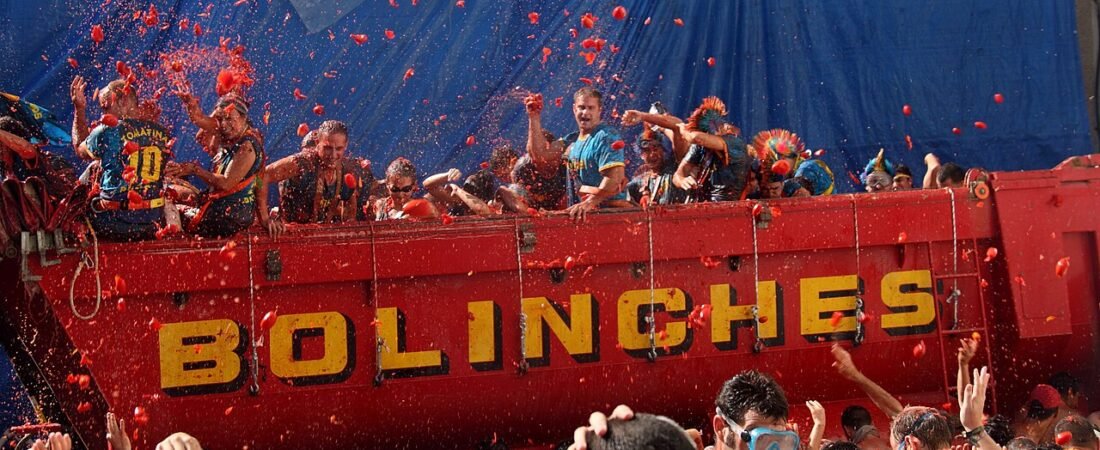
Spain doesn’t do celebrations quietly. Whether it’s grown adults hurling tomatoes at each other or towering papier-mâché sculptures going up in flames, Spanish festivals are loud, joyful, a little chaotic — and unforgettable. Two of them belong at the top of any culture-curious traveler’s list: La Tomatina and Las Fallas.
La Tomatina: the world’s biggest food fight
Every August in the small town of Buñol, near Valencia, tens of thousands of people gather to throw roughly 150,000 tomatoes at one another for one gloriously messy hour. It started in the 1940s almost by accident and grew into a global phenomenon.
- Book ahead. Tickets are now required and the town fills up. Many people stay in Valencia and travel in for the day.
- Dress to ruin. Wear clothes and shoes you’ll happily throw away. Goggles protect your eyes from the acidic juice.
- The rules matter. Squash each tomato before throwing it, and stop the moment the second signal sounds. It’s chaos with etiquette.
Las Fallas: art, fire, and a city that doesn’t sleep
Held in Valencia each March, Las Fallas is something else entirely. Neighborhoods spend all year building enormous, satirical sculptures called fallas — some several stories tall — and then, on the final night (La Cremà), they burn nearly all of them in spectacular bonfires.

- Come for the daytime too. The mascletà, a thunderous daily fireworks display you feel in your chest, happens at 2pm in the Plaza del Ayuntamiento.
- Eat the buñuelos. Pumpkin fritters with thick hot chocolate are the unofficial fuel of the festival.
- Expect noise. Firecrackers go off day and night. This is not a sleep-in kind of trip.
Planning your trip: dates, budgets, and where to stay
La Tomatina takes place on the last Wednesday of August, while Las Fallas fills Valencia in mid-March, building through the month and climaxing with La Cremà on the night of March 19. They are separate trips — but conveniently, Valencia works as the base for both.
Getting there is easy. Valencia has its own airport with plenty of European connections, and high-speed trains link it to Madrid in under two hours and to Barcelona in around three. For La Tomatina, Buñol is a short regional train ride from Valencia — most festival-goers day-trip in and stumble happily back out.
Budget-wise, Spain remains gentler on the wallet than much of Western Europe. Tomatina entry tickets sit in an affordable range (check the official site, as prices and capacity change from year to year), and Las Fallas itself is free — the sculptures, the mascletà, the fireworks, all of it happens in the open street. The real cost is accommodation: Valencia hotel prices climb steeply during Fallas week and around La Tomatina, so booking several months ahead is the single best money-saving move you can make. Beyond lodging, a modest daily budget covers generous amounts of paella, horchata, and buñuelos without strain. Give Las Fallas at least three or four days; La Tomatina needs only one, plus a very long shower.
The stories behind the madness
Both festivals have origin stories as good as the events themselves. La Tomatina reputedly began in 1945, when a street scuffle near a vegetable stall turned into an impromptu tomato battle. The town liked it enough to do it again. Authorities banned it more than once in the years that followed, locals kept resurrecting it, and eventually the town surrendered to tradition.
Las Fallas grew from something humbler: carpenters marking the feast of Saint Joseph, their patron, by burning leftover wood scraps in the street each spring. Over generations those bonfires evolved into the satirical sculptures — called ninots — that now skewer politicians, celebrities, and current events with gleeful Valencian irreverence. Each year one ninot is spared from the flames by public vote and retired to the local Fallas museum, a small mercy in a festival built on joyful destruction. Look out too for the falleras — women in spectacular traditional dress — and the Ofrenda, when the city carries armfuls of flowers to build an enormous floral tribute to the Virgin. Fire gets the headlines, but the flowers might break your heart.
A few insider tips
For La Tomatina: leave your phone at your accommodation or seal it in a waterproof pouch, wear the goggles without embarrassment, and stay near the edges if the crush in the center gets too much — locals famously hose down grateful, tomato-soaked strangers afterward. For Las Fallas: walk the neighborhoods in daylight to see the ninots up close before they burn, arrive very early if you want to feel the mascletà from the square itself, and pack earplugs for sleeping — firecrackers are a round-the-clock soundtrack. In both cases, eat a few streets back from the main crowds; the best paella of your trip will not be on the main square.
How to travel these festivals well
Both events draw huge crowds, so book accommodation months in advance and keep your valuables secure and minimal. Learn a few words of Spanish — a simple hola and gracias go a long way. And resist the urge to watch everything through your phone. The magic of these festivals is in being fully, messily present.
Why these matter
Festivals like these aren’t just spectacle — they’re a window into what a culture values: community, humor, tradition, and the willingness to let go. That’s the heart of meaningful travel.
Quick questions, quick answers
Can you do La Tomatina and Las Fallas on one trip?
Not realistically — La Tomatina happens in late August and Las Fallas in mid-March. Think of them as two excellent excuses to visit Valencia in different seasons.
Do you need tickets for these festivals?
La Tomatina, yes: entry is capped and ticketed, so buy through the official site well ahead. Las Fallas is free and unticketed — the whole city is the venue — though seats for certain events can be purchased.
Are these festivals family-friendly?
Las Fallas, absolutely — children are everywhere, though bring ear protection for little ones. La Tomatina is an adults’ scrum; families usually watch from the sidelines or enjoy the calmer surrounding fiestas in Buñol instead.
Heading to Spain for a festival? My free Travel Budget Calculator covers planning, packing smart, staying safe in big crowds, and traveling like a local. — Lina